Kasaragod Family Itinerary: 6 Days Slow Travel Coastal Plan

Updated: May 1
Explore a structured 6-day Kasaragod family itinerary that maps beaches, backwaters, and village routes into a steady flow shaped by timing, distance, and local rhythm.

Kasaragod lies along the northern edge of Kerala, where the coastline begins to loosen and movement slows without instruction. Travellers arriving from Chennai enter a landscape that does not respond to speed.
The region operates on its own structure. Heat defines the middle of the day. Evenings reopen access. Short distances shape movement, yet poor sequencing fragments time. Without alignment, the day breaks into rushed visits and long idle gaps.

Most itineraries follow a fixed pattern. They compress multiple locations into narrow windows, move against local conditions, and leave departure planning unresolved. The structure appears efficient, but the experience loses continuity.
This itinerary exists to correct that pattern. It builds a method where timing, movement, and transitions align, allowing the region to unfold without friction.
At a Glance: Kasaragod Family Itinerary
This plan unfolds across five days and four nights, shaped by the rhythm of travel from Chennai and the way time behaves along the northern coast of Kerala.
The structure does not attempt to compress movement into fixed slots. It allows space for arrival to settle, for distances to reduce naturally, and for each segment of the region to be experienced without overlap.
Days are arranged to limit backtracking, contain movement within defined areas, and avoid forced transitions during peak conditions. Travel, rest, and exploration connect without competing for time.
Seasonal conditions influence this design. Heat restricts the middle of the day. Evenings extend usable hours. These shifts are accounted for in advance rather than managed on the ground.
Each part of the itinerary works towards a single outcome: reduce friction, maintain continuity, and let the journey progress at a pace the region supports.
Why This Itinerary Differs From Most Online Kasaragod Itineraries
Arrival Absorption: The first phase accounts for long-distance rail travel from Chennai, allowing the body and schedule to settle before introducing movement.
Geographic Containment: Each day operates within a limited stretch of the Kasaragod region, reducing crisscross travel and preserving continuity across locations.
Time-Aligned Movement: Activities follow light and heat patterns, avoiding forced movement during restricted hours and extending usable time when conditions open.
Transition Control: The plan limits unnecessary shifts between locations, preventing fragmentation caused by frequent packing, transfers, and route changes.
Energy Distribution: Daily flow balances movement with pauses, ensuring that effort does not accumulate across consecutive days.
Departure Precision: The final day aligns with realistic checkout and train timing, removing idle gaps and avoiding extended waiting periods.
Family Practicality: Routing, pacing, and timing reduce logistical load, making the plan workable for a group that includes a child.

The trip cost comes next so you understand the financial outline before entering the day-wise plan.
Kasaragod Family Trip Cost Breakdown
This trip operates across a long rail corridor, short-distance local movement, and time-bound daily access shaped by heat and light. Their alignment determines how each day unfolds and how effectively available time gets used.
The cost structure follows this operating logic, with figures drawn from actual bookings, observed pricing, and final payments rather than broad estimates. Each component is grouped to show where spending concentrates and how it supports the overall flow of the trip.
Expenses are organised into four clear pillars: transport, stay, food, and activities. This separation shows how decisions in one area influence the rest, especially across consecutive days.
The total presented below represents the full payable outlay under this structure. It establishes cost visibility before the day-wise plan, allowing decisions to be assessed with clarity rather than assumption.
What Each Cost Pillar Includes

Kasaragod Family Itinerary Overview
This itinerary follows a coastal rhythm shaped by travel distance, heat cycles, and short-range movement across the Kasaragod region.
Each day establishes a clear direction without stacking locations into fixed slots. Movement begins after conditions open, pauses during restricted hours, and resumes when access improves. This sequence prevents early fatigue and preserves continuity across the trip.
The plan controls transitions rather than maximising coverage. Travel segments remain contained, reducing repeated routing and unnecessary movement between distant points.
Arrival timing, on-ground flow, and departure alignment operate as a connected structure. No single day carries excess load, and no segment extends beyond its natural window.
The outline below presents a sequence where each day holds a defined role, allowing the region to unfold through spacing, not compression.

Critical Planning & Booking Note
Execution depends on aligning bookings with regional constraints and daily conditions. Rail access, stay availability, and movement windows define how well each day holds together.
Rail Reservation Window: High-demand trains on this route fill quickly. Book within the 60-day ARP to secure confirmed 2AC berths and retain timing continuity across arrival and departure legs.
Stay Availability: The comfort segment has limited inventory. Confirm a well-rated homestay or hotel in advance to avoid last-minute compromises in location, quality, and daily travel efficiency.
Daily Movement Logic: Heat restricts midday access while mornings and evenings remain usable. Poor sequencing splits the day into idle gaps and rushed visits, reducing overall experience quality.
Evening Cut-off: Road navigation beyond main routes becomes inconsistent after dark. Plan returns before late evening to avoid delays and maintain continuity across the day’s movement.
The Definitive Cost Breakdown: Kasaragod Family Itinerary
This section consolidates all major expense pillars, including transport, accommodation, food covering both stay and train travel, entry fees, and mandatory access logistics, to present a structured cost estimate for a family visiting Kasaragod.
The figures reflect actual booking observations under the defined itinerary sequence. They are presented without compression or rounding to preserve decision clarity.
Reviewing the complete outlay before finalising plans establishes realistic expectations and enables budget control before confirming reservations.
Day-by-Day Kasaragod Family Trip Itinerary
This Kasaragod Family Itinerary follows a coastal rhythm shaped by heat, access, and short-distance movement. Mornings and evenings remain active, while midday holds space for reset and recovery.
The sequence builds from arrival-day calibration into two structured exploration days, where key locations align with light, access, and proximity rather than distance.
Each day operates with a single focus, allowing movement to remain contained and transitions to stay predictable.
The plan closes with a measured exit aligned to rail timing, ensuring the journey concludes without compression or last-minute adjustments.
Day 1: Chennai to Kasaragod Rail Departure
The journey begins from Chennai Central Railway Station with the boarding of Train 12601 MAS MAQ SF Mail at 20:10. The evening departure secures a full overnight rail stretch, converting transit time into uninterrupted rest while covering the longest leg of the itinerary.
The route moves inland across Tamil Nadu before approaching Kerala’s coastal belt toward the final stretch. Travelling in 2AC ensures a contained and comfortable bay for the family, supporting stable sleep cycles through the night.

Day 1 remains intentionally minimal in activity. The structure eliminates early-stage fatigue and preserves physical bandwidth for arrival, transfers, and exploration from Day 2 onward.
Practical Notes
Boarding Window: Arrive 30–40 minutes before departure to identify coach position and settle without last-minute movement.
Baggage Configuration: Keep essentials (water, chargers, light snacks) within reach; secure primary luggage under berths for overnight stability.
Thermal Comfort Strategy: Carry a light insulating layer (jacket, shawl, or stole) to manage AC temperature variation through the night.
Meal Planning: This service does not operate a pantry car. Pre-book dinner via IRCTC e-catering to ensure timely and reliable meal delivery at the boarding station.
Experience Basis
Energy Preservation: Overnight rail converts travel time into recovery, preventing fatigue spillover into the first active day.
Continuity in Movement: A single uninterrupted leg avoids fragmented transit and establishes a stable travel rhythm early in the itinerary.
Family Comfort Advantage: 2AC bays allow consolidated seating and sleeping arrangements, reducing disturbance and improving rest quality.
Day 2: Arrival, Backwater Stay, and Coastal Stretch
Late morning, the train reaches Kasaragod Railway Station. A pre-arranged vehicle exits the station zone and heads toward a stay positioned along the backwater or coastal belt. The timing retains usable daylight without compressing the first half-day.
Check-in leads into a planned pause. The early afternoon holds space for rest, hydration, and settling into the new environment before stepping out.
Short walks within the property keep movement light and contained. This phase resets the body after overnight rail travel without forcing early activity.
The stay anchors the schedule through access, not setting. Proximity to backwater stretches or the coastal belt reduces transfer time and keeps the first day free from unnecessary movement.

Lunch anchors the day around regional coastal cooking. Kitchens in this belt work with fresh catch sourced the same morning.
Preparations such as Avoli Pollichathu use black pomfret wrapped in a banana leaf and cooked with spice paste, shaping the meal through technique rather than variety.

By mid-afternoon, the route moves toward Kodi Beach through a narrow approach that cuts across a wooded stretch and low-elevation road sections.
The drive transitions into Kappil Beach, where a short road connection opens directly onto the shoreline. This sequence keeps movement continuous while avoiding long walks, especially with a child.
Evening holds along the coast. The sea line opens wide, and the light drops across the horizon before an early return toward the stay.

Practical Notes
Arrival Transfer: Lock driver details in advance. Station exits remain crowded during late morning arrivals.
Midday Reset: Hold 2–3 hours post check-in. Avoid stacking movement immediately after the train.
Meal Planning: Place lunch as the primary meal. Inform the stay in advance for fresh seafood preparation.
Beach Access Strategy: Use vehicle movement between Kodi and Kappil. Walking the full stretch adds strain and time.
Experience Basis
Staggered Start: Late morning arrival and midday pause prevent fatigue from shaping the day.
Food as Structure: Local cooking methods define the experience. Fresh catch and preparation style anchor the memory.
Access Over Distance: Road-linked coastal points allow coverage without physical strain. The itinerary favours continuity over effort.
Day 3: Bekal Fort, River Crossing, and Interior Landscapes
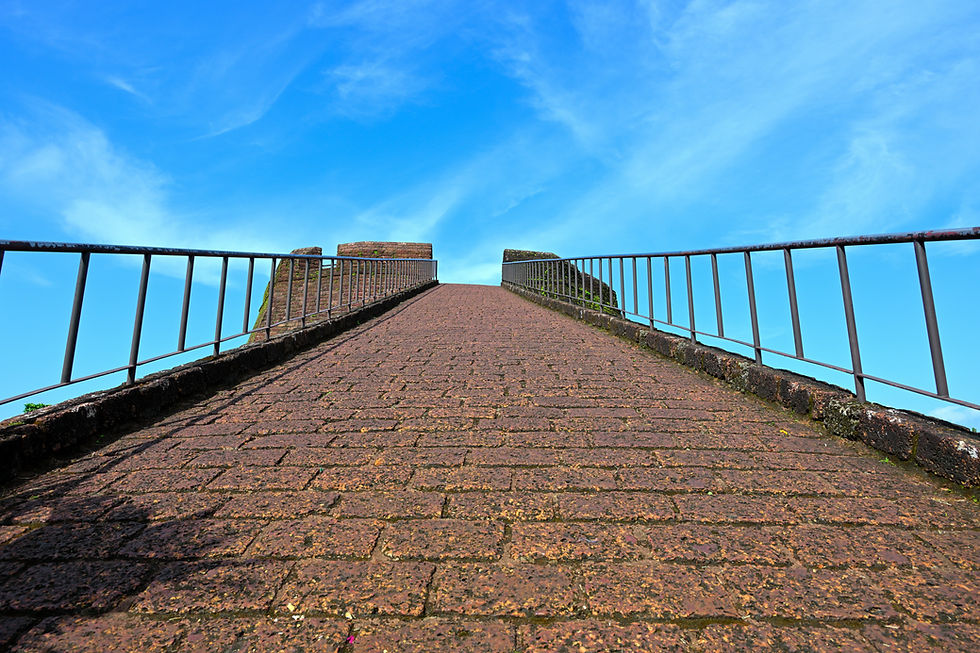
The day begins with a direct drive to Bekal Fort, timed to align with its 8 AM opening window. Entry at this hour avoids heat build-up and crowd inflow, allowing uninterrupted movement across the ramparts and internal pathways.
The sloped observation tower anchors the visit. Climbing early secures a clear line across the Arabian Sea and the surrounding laterite landscape. The fort’s geometry unfolds through elevation shifts rather than long walking stretches, keeping effort contained.

Late morning shifts back toward the stay for reset and lunch. The pause absorbs the physical load from the fort walk and prepares the second half of the day.
Afternoon moves inland toward Cheroor Hanging Bridge, a pedestrian suspension crossing over the Chandragiri River.
The approach road narrows through the village stretches before opening to the river corridor. Crossing the bridge places you above a slow-moving channel framed by coconut cover and open banks.

Return begins before late evening, keeping the route within daylight and avoiding low-visibility rural segments.
Practical Notes
Fort Entry Timing: Reach Bekal Fort at opening (8 AM) to avoid queue build-up and heat exposure.
Ticket Booking: Use the official ASI portal for booking → https://asi.payumoney.com/quick/bfp
Movement Pattern: Follow a loop route inside the fort. This avoids repeated climbs across sloped sections.
Midday Reset: Return to stay post-fort. Do not stack bridge visits immediately after.
Bridge Access: Road narrows near the final stretch. Use a driver familiar with the route.
Experience Basis
Bekal Fort Timing Advantage: Early entry at Bekal Fort places high-effort exploration within cooler hours and reduces exposure to laterite heat across open surfaces.
Alternating Terrains: Coastal fort and inland river crossing create contrast without long transit.
Controlled Return: Ending before dark removes navigation uncertainty and keeps the day predictable.
Day 4: Lake Temple, Regional Food, and Slow Exit
Day 4 morning begins with a short drive toward Ananthapura Lake Temple. The temple sits within a freshwater tank, accessed through a narrow causeway that separates the shrine from the surrounding settlement.

The inner structure centres around the sanctum, with the water body forming a natural boundary. The temple holds a long-standing association with a resident crocodile regarded as the guardian of the shrine.
The earlier inhabitant remained part of the temple ecosystem for decades before its death in 2022, after which another crocodile was introduced to maintain continuity of this tradition.
Entry during early hours keeps movement steady along the confined access path and allows a clear circuit around the inner sections without congestion.
The setting remains contained, with water, stone, and ritual movement defining the experience.

Return to the stay anchors the late morning. Lunch focuses on regional preparation styles, with dishes such as Crab Kizhi Roast, where spiced crab cooks within a sealed banana leaf, concentrating flavour through steam and heat.

Afternoon holds within the property. The schedule avoids additional movement and uses this window for rest, short walks, and final alignment before departure.
The day closes without stacking new locations. The itinerary shifts from movement to containment, preparing for the return leg.

Practical Notes
Lake Temple Timing: Operating hours run from 5:30 AM to 1:00 PM. Early entry keeps the causeway and inner sections manageable.
Dress Code: Follow temple norms. Men wearing shorts or lungis are not permitted inside. Carry appropriate clothing to avoid entry issues.
Meal Coordination: Inform the stay in advance for speciality dishes like Crab Kizhi Roast.
Afternoon Hold: Avoid adding new locations. Use this time for recovery and packing.
Experience Basis
Low-Intensity Close: Final day reduces physical demand and prevents fatigue spillover into departure.
Cultural Anchor: Temple visit introduces regional context beyond coastal movement.
Containment Strategy: Holding the afternoon stabilises the itinerary before transition.
Day 5: Departure Alignment and Return Transit
Morning opens within the property, holding a slower start before departure. Light spreads across the backwater surface, creating a calm window before movement resumes.
This phase avoids early packing pressure and keeps the final hours contained.

Breakfast anchors the exit. A regional preparation such as vellayappam, built on fermented batter with coconut and freshly tapped toddy, sets a familiar tone without introducing new variables.
The meal remains light and supports travel without fatigue.

Checkout aligns with train reporting time. The transfer to Kasaragod Railway Station remains short, avoiding buffer stacking or idle waiting at the platform.
Boarding follows the scheduled departure of 12602 MAQ–MAS SF Mail at 14:35. Settling in early stabilises luggage placement and removes last-minute movement inside the coach.

The itinerary closes with a controlled transition. Movement replaces exploration, but structure remains intact until return.
Practical Notes
Morning Buffer: Complete packing before breakfast. Avoid last-hour compression.
Breakfast Selection: Choose light regional options such as Vellayappam. Avoid heavy meals before transit.
Station Transfer: Depart with a 30–40 minute buffer. Maintain a clean handoff from stay to station.
Boarding Discipline: Locate the coach position early. Load luggage and settle before departure time.
Experience Basis
Soft Exit Strategy: Final day reduces decision load and maintains rhythm.
Familiar Inputs: Regional breakfast keeps digestion stable during travel.
Structured Closure: Defined departure timing prevents drift and preserves flow.
Day 6: Arrival and Final Transfer
The overnight journey concludes with arrival at MGR Chennai Central Railway Station in the morning. The transition shifts from rail movement to city entry without intermediate stops.
Disembarkation follows a direct exit strategy. Luggage retrieval, platform clearance, and movement toward the station exit happen in sequence without pause.
A pre-arranged cab or pickup completes the final leg from the station to home. The route moves through early city traffic, which builds quickly after peak morning hours.
The trip closes without extension. The structure holds until the final transfer completes.
Practical Notes
Arrival Window: Move off the platform soon after arrival. Morning rush builds fast.
Exit Strategy: Use the main exit. Avoid internal delays inside the station.
Final Transfer: Confirm a cab or pickup in advance. Align the pickup point clearly.
Experience Basis
Direct Closure: No additional layers after arrival keeps the transition clean.
Time Advantage: Morning arrival leaves the rest of the day open for rest and reset.
Continuity of Control: Maintaining structure until the final drop prevents fatigue spillover.
Practical Takeaways for a Kasaragod Family Trip
This itinerary follows a controlled movement rhythm: short coastal transfers, contained exploration blocks, and structured rail transitions.
Each day builds through proximity rather than distance. Locations cluster along the coast and inland corridors, reducing travel fatigue and preserving usable hours on the ground.
The plan limits guesswork. Entry timing, return buffers, and meal alignment remove friction points that typically disrupt short-duration trips.

The itinerary supports families who prioritise stability and clarity. It places recovery windows after transit, avoids stacking high-effort segments, and keeps transitions predictable across all four days.
It aligns coastal exploration with light windows, holds midday for reset, and shifts inland only when conditions support it. The result stays controlled from arrival to departure.
FAQ: Risk, Logistics and Schedule Stability
Planning a trip to Kasaragod involves managing rail timing, short-distance transfers, and coastal weather variability. These answers address key decision points that affect comfort, timing, and overall trip stability.
What is the best time to visit Kasaragod for a family trip?
October to March offers stable weather, lower humidity, and clear coastal conditions, making outdoor movement and short trips easier to manage.
How reliable are train timings for 12601 and 12602 routes?
These superfast trains run on schedule but may face minor delays. Keep a 30–60 minute buffer for both arrival and departure planning.
How far are key locations from Kasaragod Railway Station?
Most coastal and inland spots lie within 15–45 minutes from Kasaragod Railway Station, keeping daily travel short and manageable.
Is local transport easily available for sightseeing?
Local cabs work best. Pre-booking for the full day ensures route continuity and avoids last-minute delays or availability issues.
Can Bekal Fort and nearby spots be covered in one day?
Yes, Bekal Fort and nearby areas align in one loop if started early and paced with a midday break.
How should families manage heat and fatigue during the trip?
Plan outdoor visits in morning and evening. Use midday for rest at the stay to maintain energy across consecutive days.
Are Kappil and Kodi beaches safe for children?
Kappil Beach is suitable near shore. Avoid deep water as currents shift along this coastal stretch.
What food choices work best during the trip?
Choose fresh local meals with fish and coconut. Light preparations support digestion and keep energy stable during travel.
Should meals be pre-planned or decided on the go?
Pre-plan key meals with the stay for timing control. Use local options selectively to avoid delays during peak hours.
What are the key risks that can disrupt this itinerary?
Train delays, late starts, unbooked transport, and weather shifts affect timing. Use buffers, confirm bookings, and start early.


