
About Traveler Talez
Traveler Talez documents lesser-known places across India through firsthand travel narratives and original photography.
The focus remains on immersive journeys supported by clean editorial structure and an ad-free reading experience. Each story prioritises depth, accuracy, and context over volume or trends.
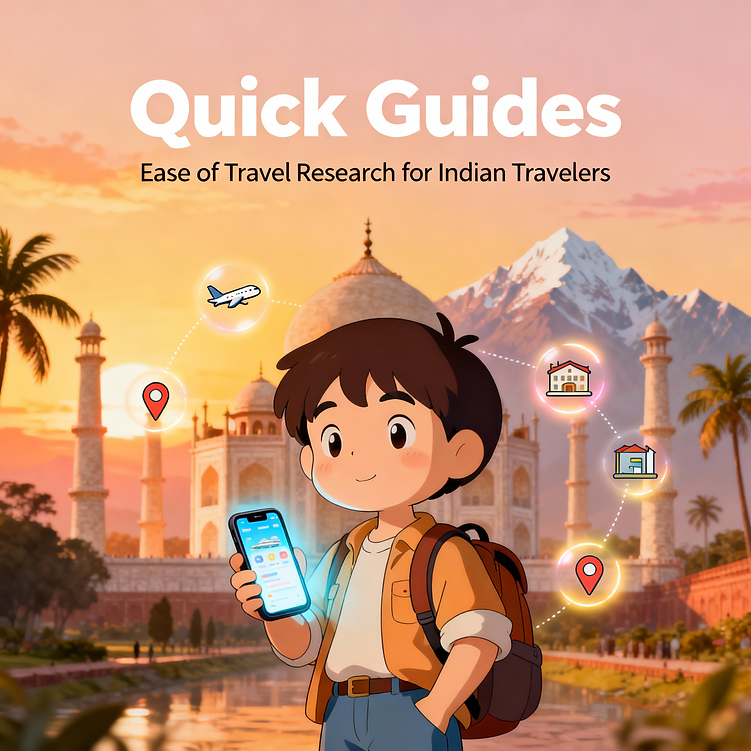
Since May 2025, Traveler Talez has followed a hub and spoke editorial model where long-form journeys connect to Quick Guides, Itineraries, and Behind the Shot narratives.
Editorial standards align with Google E-E-A-T and Helpful Content principles, especially for guides designed for use on the road.


All About Me
Hi, I'm Subhashish Chatterjee, the human behind Traveler Talez.
Travel has never been an occasional escape for me. It has remained a constant from the beginning. As an infant, I undertook an 800-kilometre journey with my family. That early movement set the direction for a life shaped by travel.
My father’s transferable job meant growing up across different regions of India, absorbing landscapes, cultures, and ways of life along the way.
A long corporate career followed, one that kept me moving across cities and regions, extending the rhythm of travel into working life. By my mid-twenties, I had lived in 15 cities across 10 Indian states.
Travel never revolved around ticking off destinations. I moved toward landscapes, mountains, forests, coastlines, and places where the environment shapes daily life.
In 2016, my first solo journey along the Konkan coast marked a turning point. That trip clarified something fundamental. Travel was not a hobby running alongside work. It shaped how I understood the world and myself.
Traveler Talez began during this phase as a way to document journeys with context and continuity, not as isolated posts.
What started as a personal archive in 2016 has evolved into a structured body of work. Writing became a way to document these experiences, and blogging followed.

Photography developed as an extension of travel, not as an end in itself. Early images served as records. Over time, landscapes such as Spiti Valley pushed a stronger focus on composition, balance, and light. The work shifted from documentation to craft.
In 2020, the pandemic introduced a pause. Living alone in Mumbai for months, I redirected that time into studying photography through books, long-form material, and sustained practice.
During this period, I stepped away from full-time corporate employment and began shifting toward a path that could integrate visual storytelling with how I worked and travelled.

By 2021, I entered a digital nomad phase, combining travel with consulting across technology, AI, and strategy. Travel and work no longer operated as separate pursuits. Each informed the other.
That same year, I began working with the Nikon Z7, using it to engage more closely with landscapes, architecture, and wildlife.
Field use exposed both creative possibilities and technical limits, shaping how I approached both equipment and observation.
Wildlife photography became a sustained pursuit from 2022 onward. Early missed frames and failed sightings established the need for restraint and preparation.
Across multiple seasons in Kanha, Panna, Satpura, and Gir, the work evolved into a practice built on waiting, return visits, and pattern recognition.
In 2024, field constraints in wildlife and action-driven environments led to a transition to the Nikon Z8. The upgrade followed repeated limitations observed in the field rather than equipment cycles or trends.

I worked in the technology industry for over 17 years, through April 2025, across digital transformation, programme management, strategy, and artificial intelligence.
During this phase, I used AI to support research, fact validation, and planning. It helps test assumptions, organise material, and improve clarity during writing. Field experience, observation, and judgement continue to drive every piece of work.
In May 2025, I shifted to working full-time on Traveler Talez. This marked a transition from a personal archive to a structured editorial platform.
Traveler Talez does not follow a chronological blog format. It is organised through a hub-and-spoke content model, supported by defined formats and thematic hubs designed to improve discoverability and support trip planning. The broader structure, format system, and geographic organisation are outlined on the Website Architecture page.
Long-form journeys form the foundation and connect to Quick Guides, Itineraries, and Behind the Shot narratives.
Alongside this structure, theme-based hub pages organise journeys across broader travel interests.
Hub pages such as Wildlife Safaris, Offbeat Hill Stations, and Coastal Escapes bring together related destinations and narratives across all formats. This layer supports thematic discovery and complements location-based navigation.
I publish work in structured cycles, with each cycle building across long-form journeys, guides, itineraries, and visual narratives. This approach maintains continuity while ensuring that each piece emerges from field experience and context.
Traveler Talez operates with a site-first approach. The focus remains on building a permanent body of work on this platform. Social channels function as distribution points for new publications and updates, not as primary content destinations.
To explore the journeys so far, the Where I Have Been page serves as the starting point. It features an interactive India map that organises journeys by state, displays post counts, and connects to Long Stories, Quick Guides, Itineraries, and Behind the Shot features.This system allows navigation by location, theme, and format, linking every journey into a unified structure.
I work with a limited number of readers on custom travel planning and consultations. If you’re interested, please submit your request through the form on this page.
For feedback or general inquiries, feel free to reach out via the contact page on this site or use the chat icon at the bottom right.