Ultimate Gir National Park Family Itinerary: 7 Days Premium Trip

Updated: Aug 22
Plan the Ultimate Gir National Park Family Trip. This 7-Day Premium Itinerary covers comfort cost, precise safari logistics, and multi-generational planning.

Gir National Park stands as the last wild sanctuary for the Asiatic Lion. This dry, deciduous forest ecosystem presents a profound challenge to any visitor hoping for consistent results.
Achieving that goal depends on understanding animal movement, light cycles, and correct time slot utilisation, not on simple good fortune.
Most visitors book short, standard trips. They execute generic morning and evening safaris, a common approach that fails to deliver consistent results across the park's diverse zones.

This itinerary exists to correct that common failure. It is a proven blueprint, developed from firsthand experience, that maps a sequence of drives against predictable shifts in the Gir habitat.
The plan is a robust structure that identifies a critical window of opportunity when the park's most elusive cat moves. This method enables a traveller to maximise their chances of documenting Gir's apex predators.
At a Glance: Gir National Park Family Winter Itinerary
This itinerary follows a premium family travel theme designed for rail, road, and flight connectivity across seven days and six nights. The plan also integrates a critical, restful cultural detour to a nearby coastal heritage site. This necessary break prevents tracking fatigue and provides a moment of recovery.
The structure reflects a deliberate approach to timing, pacing, and sequencing, with February chosen to balance lower crowd density and favourable wildlife movement.
Each element supports sustained wildlife tracking while maintaining comfort for family travel.
Why This Itinerary Differs From Most Online Itineraries
Focused Drives: The plan prioritises tracking across key forest zones through carefully sequenced safari time slots to improve opportunities for lion and leopard sightings.
Measured Pacing: Safari intensity balances with rest periods to support energy levels across multiple tracking days.
Smart Timing: February travel reduces crowd pressure while supporting better movement conditions inside the forest.
Fatigue Control: A planned cultural detour to a nearby coastal heritage site provides recovery between jungle drives and limits tracking exhaustion.
Family Comfort: Travel days, safari slots, and rest windows follow a sequence that suits multi-generation family groups.
Buffer Planning: Built-in time cushions reduce stress after travel and before early morning safaris.
Low Complexity: The routing across rail, road, and flight minimises operational friction and keeps focus on the core wildlife experience.

The trip cost comes next so you understand the financial outline before entering the day-wise plan.
Gir National Park Family Trip Cost Breakdown
The Gir-Somnath trip involves intensive, high-frequency travel across different modes and segments. It demands early morning safaris, long road transfers between the jungle and the coast, and strict adherence to booking windows for flights, trains, and official forest permits.
The cost model below builds these multi-segment realities into the budget. Transport costs follow verified fares from official booking portals (Airlines, IRCTC). The accommodation, activities, and food costs follow actual online booking rates and audited premium estimates.
The resulting figures reflect the full cost you pay at checkout, making the budget transparent and reliable. They help you judge feasibility, compare trade-offs, and plan safe, premium movement for your group.
What Each Cost Pillar Includes

Gir National Park Family Itinerary Overview
This Family Gir National Park itinerary follows a calculated wildlife tracking rhythm ideally suited for the cooler, pre-Shivratri period of early to mid-February. Each day layers immersive jungle tracking with distinct recovery periods.
This structure protects you from safari fatigue and the dry heat of the deciduous forest. It respects the patience required to track apex predators while maintaining comfort for every generation.
The plan below outlines a diverse route blending an inbound flight, deep forest drives, a coastal heritage detour, and a scenic rail return. Every title captures the specific goal of the day, and every description ensures steady movement through the wild landscape without exhaustion.
Critical Planning & Booking Note
Wildlife relies on luck. While this itinerary maximizes tracking time across key zones, lion and leopard sightings in the open jungle remain a matter of chance. No schedule can guarantee a wild encounter.
Timing Alert (Feb 2026): Avoid the Third Week of February 2026. The Maha Shivratri festival (Feb 15–16) generates massive regional crowds that disrupt traffic and service. Ensure your Tuesday start falls in the first, second, or fourth week of the month.
Advance Reservation Period (ARP): This itinerary requires strict timed reservations to work.
Trains: IRCTC bookings open 60 days prior to travel.
Safaris: Permits open 90 days in advance. You must book these immediately when the window opens only through the Official Gujarat Forest Department website for your Gir Jungle Safari and Devalia Safari Park permits.
The Definitive Cost Breakdown: Gir National Park Family Itinerary
This section integrates all key expense areas: wildlife permits, logistics, accommodation, and inter-city transport, to provide a realistic financial estimate for your family undertaking this Gir National Park itinerary.
Establishing this comprehensive outlay before the day-wise plan gives you a clear and reliable expectation of the journey's actual cost under multi-generational travel conditions.
Day-by-Day Gir and Somnath Family Trip Itinerary
This plan aligns with the rhythm of the forest: high activity at first light and dusk, followed by rest during the midday heat. The schedule prioritises the lion's movement patterns while managing the practicalities of permits and travel.
The sequence shifts from the intense focus of tracking in the Core Zone to the spiritual calm of the coast. This structure ensures the family experiences the raw wild and the cultural heritage without rushing the logistics.
Day 1: Mumbai to Gir National Park
Your expedition for the Asiatic lion starts in the pre-dawn hours at Mumbai Terminal 2. To secure maximum daylight hours in the sanctuary, we use the first connection, Air India AI-2785, departing at 06:35 AM. This flight lands in Rajkot (Hirasar) by 07:45 AM, avoiding midday heat and traffic congestion.
A pre-arranged SUV transfer starts from Rajkot Airport. The 3.5-hour drive to Sasan Gir crosses the Kathiawar peninsula, reaching The Premier Gir Resort by noon. This timing allows for check-in and lunch.
The afternoon opens the forest to you. At 14:30, report for the Evening Safari (3:00 PM – 6:00 PM) in the Gir Jungle Trail (Core Zone).
This slot is critical. As the winter sun dips, the air cools. The lions, dormant during the midday glare, begin their evening prowl. This offers the highest probability of a sighting on Day 1.

Practical Notes
Flight Protocol: Complete baggage drop at CSMIa T2 by 05:15 AM to ensure a smooth 06:35 AM departure.
Safari Gear: The open gypsy ride generates dust. Carry a scarf or buff for face protection. Keep camera gear covered when not in use.
Safari Drop-off & Pickup: Sinh Sadan (the safari reporting point) lies 8.2 KM from the resort. This distance necessitates pre-arranged transport, as the returning safari gypsy will not drop you at the resort. Coordinate a round-trip drop from the hotel reception at check-in.
Post-Safari Logistics: If your family plans to visit the souvenir shops or market area near Sinh Sadan after the drive, coordinate a separate pickup service from the hotel in advance.
Permit Processing: Designate one group member to complete the verification and vehicle charge payment at Sinh Sadan. If you prefer the hotel desk handle this administrative task for a fee, hand over all required permit slips during check-in, and ensure the hotel confirms completion at least one hour before the safari departure.
Plastic Ban Policy: Gir National Park enforces a total ban on single-use plastic. Carry reusable containers. Safe drinking water is available on-site; the park provides reusable steel water bottles for a refundable deposit of INR 10. Return the bottle after your safari.
Experience Basis
Timing Advantage: AI-2785 offers a "First Wave" benefit. It avoids the cascading delays common to later flights. This guarantees the group meets the critical 3:00 PM safari reporting deadline.
Initial Strategy: A Core Zone drive on the first afternoon shifts focus from travel fatigue to wildlife tracking. This removes the pressure to secure a lion sighting during the subsequent days.
Day 2: The Lion's Day (Core Focus)
Day 2 focuses on wildlife immersion within the Gir Jungle Trail (Core Zone). This is your most important safari day, designed to maximise time during peak movement hours.

The morning begins early. You report for Safari 2 (6:00 AM – 9:00 AM). This first drive of the day gives a distinct advantage: the cold air from the previous night settles, making visibility crisp.
The lions remain active, hunting or moving before the winter sun gains strength. This is your best time to photograph the forest at first light.

Following the drive, return to the resort by 9:30 AM for a relaxed, late breakfast. The long midday gap (9:30 AM – 3:00 PM) allows the family to recharge, process photos, and prepare for the next outing.
The afternoon takes you back for Safari 3 (3:00 PM – 6:00 PM). With two full drives now complete, focus shifts from a general search to tracking specific areas where sightings or pugmarks appeared on Day 1 or the morning of Day 2.
The jeep should move slowly, dedicating time to the forest periphery and water holes where animals gather as the day ends.

Practical Notes
Morning Start: The gate opens precisely at 6:00 AM. Arrive at Sinh Sadan by 5:30 AM. This secures your gypsy a better position in the morning queue, gaining an earlier slot into the prime zones.
Warmth & Layers: The 6:00 AM drive is extremely cold in February. Carry gloves, woollen caps, and heavy jackets. A blanket or shawl increases comfort significantly for the open jeep ride.
Midday Strategy: The resort offers a 20% discount on in-house dining. Use this for a peaceful, stress-free lunch instead of leaving the property, conserving energy for the afternoon safari.
Guide Briefing: Speak with your appointed guide before each drive. Share the previous day's movement and request they focus on fresh pugmarks or known pride territories, avoiding repetition of routes.
Experience Basis
Double Core Advantage: Scheduling two Core Zone safaris in one day maximises the probability of tracking a large pride or a territorial male.
Timing Distinction: The early morning drive targets hunting and territorial movement. The evening drive focuses on sightings as the animals seek out water sources before nightfall.
Logistics Value: Using the resort's in-house dining discount streamlines the midday break. This ensures the family maintains focus on the safari schedule without transport delays or external commitments.
Day 3: Tactical Core Search and Devaliya's Certainty
Day 3 splits the focus. It secures a final, focused push for the Asiatic lion in the Core Zone, then delivers guaranteed sighting in the Interpretation Zone. This structure ensures you secure key sightings before leaving Gir.
The morning starts with a specific goal for Safari 4 (9:00 AM – 12:00 PM) in the Core Zone. This later slot holds a primary tactical benefit: a higher likelihood of sighting the elusive leopard.
As the morning air warms and the Asiatic lion moves deep into the interior for rest, the leopard often seeks the shade of the trails or denser cover. This safari aims to find animals settling into their resting places as the morning transition concludes.

After lunch, the family transfers to the Devaliya Safari Park (Interpretation Zone) for Safari 5.
Devaliya removes all uncertainty from the leopard sighting; a resident population lives within a large, walled hillock enclosure, guaranteeing a view.

Lions roam a separate, open grassland area of the park. Though free, the small area and clear visibility make lion sighting chances high.
The 5:00 PM slot is strategic. The intense heat of the day subsides, prompting both lions and birdlife to move. This final drive provides clear views of raptors and marsh birds near water bodies.

Practical Notes
Dust & Heat Protection: The 9:00 AM drive quickly transitions from cool to hot. Protect skin from the sun and dust. Wear a windcheater or light jacket for sun cover and carry a scarf or buff to cover the face on the open jeep drive.
Devaliya Logistics: The Premier Resort sits 19 KM from Devaliya via Sinh Sadan. Arrange transport from the hotel to Sinh Sadan for permit checks. The Devaliya safari gypsy departs from Sinh Sadan, covers the 11 KM round trip to the park, and returns to Sinh Sadan; the safari cost covers this journey. Coordinate a pickup from Sinh Sadan back to the resort.
Core Zone Leopard Search: Use your communication with the guide for the 9:00 AM Core drive. Ask them to prioritise areas known for rocky terrain or dense forest patches.
Devalia Vehicle Type: The Core Zone uses an open gypsy vehicle. Devaliya Park often uses a protected jeep. This offers a different perspective and may slightly limit photography angles compared to the Core Zone gypsy.
Experience Basis
Tactical Core Slot: The 9:00 AM timing removes the pressure to find a lion. It uses the transition hour to focus on the secondary, harder-to-see species like the leopard.
Devaliya Value: Utilising Devaliya guarantees a leopard sighting and provides a high chance of viewing the lion. This delivers a comprehensive, stress-free end to the Gir wildlife component.
Optimised Timing: Scheduling the 5:00 PM Devaliya drive capitalises on the reduced ambient temperature, increasing animal movement and bird activity before sunset.
Day 4: Peak Tracking and Farewell Drive
Day 4 presents your final, focused push for the Asiatic lion. The structure uses the quick, guaranteed sightings of the morning, preserving the afternoon for one last, intense tracking session in the Core Zone.
The day begins with Safari 6 (7:00 AM – 7:55 AM) at Devaliya Safari Park (Gir Interpretation Zone). This first morning slot is critical. The cool, quiet air prompts immediate movement from lions, leopards, and birds.

Utilise this drive for high-quality, close-range photography and a final, guaranteed view of the key resident species before the park opens to larger crowds.
Following a rest and lunch, the family must prepare for the last great push: Safari 7 (3:00 PM – 6:00 PM) in the Gir Core Zone.
This final core drive offers the best chance to witness the raw forest one last time. Tracking becomes the priority, and varying the zone ensures the widest experience possible for this critical last drive.

Dinner and rest must follow the final safari. The entire group needs energy and time for a smooth check-out and the long transfer planned for the following morning.
Practical Notes
Devaliya Morning Advantage: Ensure an on-time arrival for the 7:00 AM slot. The soft light and immediate animal movement maximise the experience in this short, 55-minute drive.
Core Zone Flexibility: If the online permit assigns an already-visited zone for the final afternoon drive, politely ask the Forest Officer at Sinh Sadan for a change. This leverages your multiple permits for the widest experience.
Final Tracking Strategy: Communicate a focused approach to your guide. Request they concentrate search efforts on specific, known territories and river crossings based on the latest pugmark data.
Pre-Check Preparation: After dinner, pack all non-essential luggage. Organising bags on Day 4 saves significant time, ensuring a smooth, early departure for the Somnath transfer on Day 5.
Experience Basis
Optimal Timing: Using the morning and late afternoon slots capitalises on the animals' most active hours. The 3:00 PM Core Zone drive is strategically placed as the final wildlife event.
Tracking Mastery: Seven safaris establish deep experience in the Gir ecosystem. This focus on tracking the lion's specific movements enhances the satisfaction of the final sighting, making it a well-earned reward.
Day 5: Coastal Shift to Somnath
Day 5 transitions the family from the dense jungle landscape to the Arabian Sea coast, focusing on rest and preparing for the next morning's spiritual activity.
The morning requires an early check-out from The Premier Gir Resort. Your pre-arranged transfer departs Gir for Somnath.
The journey is short, approximately 1.5 hours (80 KM), ensuring arrival at Maharaja Inn Somnath by mid-morning. Check in to secure rooms, allowing the family to refresh after the intense safari schedule.
The afternoon serves as a rest and acclimatisation period. Dedicate the evening to the first major spiritual activity: the Shree Somnath Jyotirling Temple Evening Aarti.
Plan to arrive at the temple 30 minutes before the scheduled aarti time (usually 7:00 PM). The temple atmosphere is powerful as the sun sets over the ocean, providing a profound start to the cultural leg of the tour.

After the aarti, stay to experience the Jay Somnath light and sound show (8:00 PM), which narrates the temple's history and significance.
Dinner focuses on simplicity and rest. Seek a local establishment for an authentic Kathiawadi meal. This simple, traditional cuisine is light, allowing the family to retire early to prepare for the early morning darshan the following day.

Practical Notes
Transfer Timing: Target a 9:00 AM departure from Gir. This short drive manages time well, avoids midday heat, and secures time for a smooth check-in.
Temple Dress Code: Dress requirements are strict. Ensure all family members wear conservative clothing that covers shoulders and knees. This respects the temple's sanctity and avoids entry issues.
Electronics Ban: Somnath Temple security is tight. Leave all mobile phones, cameras, and leather goods at the hotel. Alternatively, use the paid locker facilities available outside the main temple premises. Factor the security procedure time into your arrival for the evening aarti.
Aarti Viewpoint: Arriving early allows the family to secure a good viewing spot near the main mandap. The evening aarti attracts a large number of devotees.
Early Rest: Prioritise an early bedtime (no later than 9:30 PM). This is crucial for energy conservation and readiness for the early Day 6 schedule.
Experience Basis
Sequential Transition: Moving from the jungle (Gir) to the sea (Somnath) provides a powerful shift in sensory experience, maximising the enjoyment of both distinct environments.
Cultural Focus: Positioning the Evening Aarti as the first Somnath activity delivers a strong spiritual impact, setting the tone for the temple visits the next day.
Day 6: Shri Somnath Jyotirlinga Darshan and Mumbai Return
Day 6 secures the spiritual core of the trip and prioritises a relaxed sequence of events to ensure a smooth, stress-free connection to the high-speed Vande Bharat Express.
The day begins early with the main objective: the Morning Darshan at Shree Somnath Temple (temple doors open at 6:00 AM). The family walks the 200 metres from the Maharaja Inn Somnath.
This early slot is the most peaceful time for offering prayers and avoiding the large crowds that build later in the morning.
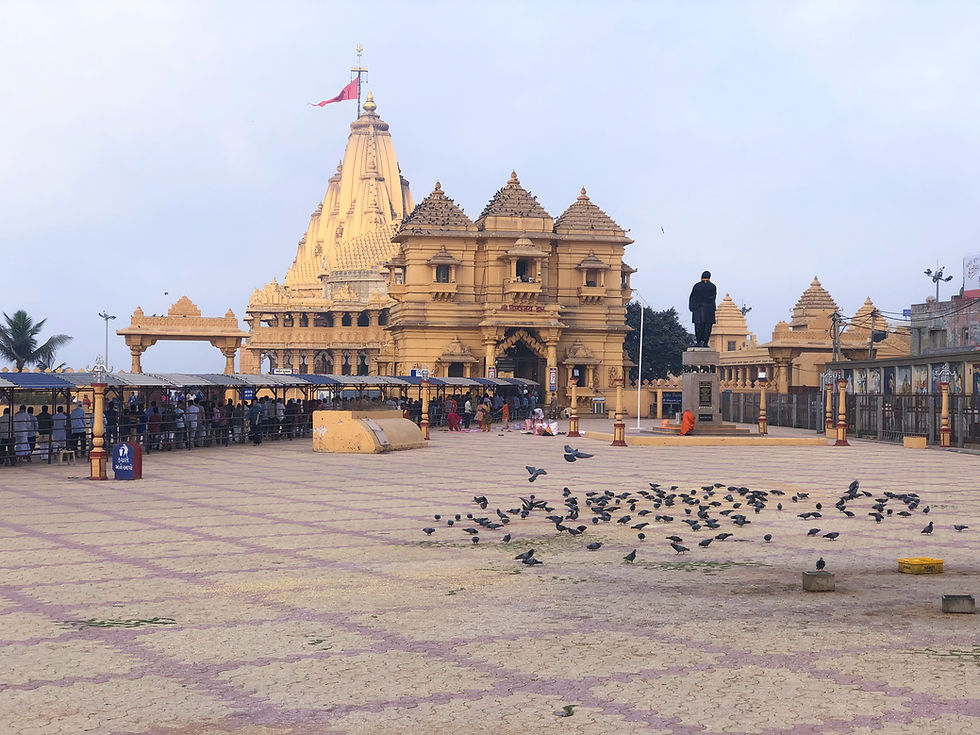
Following the darshan, use the pre-arranged vehicle to drive the family to the confluence of the three sacred rivers: Triveni Mahasangam.
From here, witness the Arabian Sea and take a quick moment at Somnath Beach. These quick stops offer a spiritual conclusion to the coastal section.

The vehicle returns the family to the hotel for a final check-out by 11:00 AM. Have lunch at a quality local eatery and proceed to Veraval Station (VRL) to board the 26902 VRL SBIB Vande Bharat Express to Ahmedabad. Dinner will be served during the journey.

Upon arrival at Sabarmati BG (SBIB), transfer to Ahmedabad Junction (ADI). The family has limited time, focusing only on the transfer and boarding the 12972 BVC BDTS Express.
The overnight journey returns you to Mumbai Bandra Terminus (BDTS) the following morning.
Practical Notes
Morning Temple Focus: Target the 5:30 AM arrival for the most relaxed darshan. Walk to the temple, then drive the loop to the Mahasangam and back to the hotel.
Check-out and Luggage: Complete all packing before the morning darshan. 11:00 AM check-out is non-negotiable. Store luggage at the reception while you have lunch.
Lunch Logistics: Since the hotel has no restaurant, plan to have lunch at a quality, pre-selected local restaurant close to the hotel to maximise time efficiency.
Transfer Buffer: The transfer from the hotel to Veraval Station should begin by 1:30 PM at the latest to accommodate security and boarding the Vande Bharat.
SBIB to ADI Transfer: The Vande Bharat arrives at Sabarmati (SBIB) at 9:35 PM. The transfer to Ahmedabad Junction (ADI) is approximately 10 KM and should be allocated 1 hour (30–40 minutes driving, plus time for platform transfers). You have until 11:30 PM to catch the final train.
Experience Basis
Priority Darshan: Starting the day with the main temple ensures the primary spiritual goal is met without the stress of an overloaded schedule.
Streamlined Logistics: Focusing on a smooth check-out and timely transfers via the Vande Bharat and connecting overnight train avoids a costly flight or uncomfortable daytime drive, maximising rest.
Day 7: Journey Concludes with Mumbai Arrival
Day 7 is the short conclusion of the trip, focusing on the early morning arrival in Mumbai and the final transfer home.
The overnight train, 12972 BVC BDTS Express, arrives at Mumbai Bandra Terminus (BDTS) at 8:15 AM.

The journey concludes here. The family collects their luggage and utilises pre-arranged transportation (cab/personal vehicle) for the final transfer from the station to their residence.
Practical Notes
Arrival Time: The 8:15 AM arrival is usually busy. Move quickly off the platform to avoid the morning rush.
Transfer: Have the final transfer (cab, pre-booked Ola/Uber, or family pickup) confirmed and ready to meet you outside the station's main exit area.
Mumbai Disembarkation: The train 12972 makes two critical stops before its final destination BDTS: Borivali (BVI) (approx. 7:21 AM) and Andheri (ADH) (approx. 7:41 AM). If your residence is closer to either of these stations, disembarking there will save considerable commute time.
Experience Basis
Smooth Transition: The early arrival ensures the family has the rest of the day to unpack and rest, concluding the trip comfortably without the stress of an afternoon journey.
Practical Takeaways for a Gir and Somnath Family Trip
This itinerary follows a precise movement rhythm: strategic safari drive sequences, quick cultural stops, and efficient rail transitions.
Each day builds on tracking success in the forest and balances the shift to coastal devotion. The plan limits guesswork, uses time well, and anchors long travel days where timing and recovery matter most.

The itinerary supports families who value precision and comfort. It aligns the safari drives with predictable lion movement, integrates rest buffers for the midday heat, and keeps the pilgrimage sequence controlled rather than rushed.
Each choice shapes a clear, stable route that ensures the well-being of every family member from the Gir forest to the Somnath coast and back to Mumbai.
FAQ: Risk, Logistics and Trip Consistency
Planning a trip to Gir National Park involves unique logistics, especially when managing premium comfort and multiple family members.
We've compiled the ten most most crucial risk-management and contingency questions to ensure your questions related to safari permits, costs, and timing to ensure your Ultimate Gir National Park Family Itinerary is stress-free from day one.
What if we fail to secure the required safari permits 90 days out?
This poses the biggest risk. Contingency: Book the Devalia Safari Park (Interpretation Zone) permits, which are easier to secure, and hire a local naturalist guide who can advise on last-minute cancellation slots.
What if the incoming flight (Mumbai to Rajkot) delays, impacting our first activity?
The itinerary includes a 2-hour travel buffer before the first safari. If delays happen, contact your Gir accommodation. They will hold your booking and assist with local road transfer adjustments.
What is the best time to visit to visit Gir National Park with family?
November to March is the best time for a family visit to Gir National Park. Weather stays comfortable, and wildlife movement improves during the dry season.
How flexible is this plan?
The core 3-day Gir safari segment stays fixed for permit logistics. To reduce the trip length to 5 days, remove the Somnath/Veraval segment. Use Rajkot airport for both arrival and departure. Alternative: Use the overnight 19217/19218 Saurashtra Janta Express train for a complete rail-only itinerary.
How much does a 7-day premium Gir safari trip cost for a family?
Budget approximately ₹1.8 Lakh for a 7-day, 6-person mixed-age family trip. This covers premium comfort lodging, all transport, and safari permits. Refer to the inclusions and assumptions for full details.
How far in advance should I book the Gir safari permit?
You should book Gir National Park and Devalia Safari Park permits 90 days in advance. Permits for December to February sell out quickly due to high demand.
Is it better to do the Gir safari on a weekday or a weekend?
Weekdays work better. Starting on a Tuesday avoids major weekend crowds and high permit costs, delivering a superior safari experience.
Why does this itinerary include Somnath Temple? Is it necessary?
Somnath is a cultural highlight and a 1.5-hour detour. It offers a crucial non-safari activity for balance. Alternative: Skip Somnath and travel from Sasan Gir to Veraval (65 km, 1hr 45 min) to catch the Vande Bharat train.
Are hospitals available near Gir National Park?
Basic medical clinics are available in Sasan Gir village. For advanced treatment, multi-speciality hospitals are located in Junagadh, about 65 kilometres away.
Is Gir National Park closed on any day?
The Devalia Safari Park closes every Wednesday. Sasan Gir National Park remains open all week but closes during the monsoon from mid June to mid October.
Does a Gir safari guarantee lion or leopard sightings?
A Gir safari does not guarantee lion or leopard sightings. This itinerary improves sighting opportunities through structured tracking drives and zone selection.


