The 20mm Secret: How Framing Transforms a Snapshot into a Story

Updated: Feb 28
Master wide-angle framing from mountains to monuments. This guide unlocks 20mm techniques and the 3D Framework to elevate your travel photography.
Have you ever stood before something grand: a palace, a mountain, a moment, and your camera could not frame it? The urge to capture that grand presence drives this story.
Online forums and AI often recommend a wider lens to solve this problem. Yet, owning a wide lens alone does not capture a wide scene. I discovered this as a traveller and landscape photographer, moving from mountains to monuments across India.

The 20mm lens became my primary tool. A tool alone does not transform a photo; technique, the art and science of harnessing the tool, changes the game.
This post continues the Traveler Talez Behind The Shot series, exploring the 3D Framework of Dream → Design → Discover through the 20mm focal length. It shows how thoughtful framing and perspective transform not just photographs but the stories they tell.
The narrative anchors technical insight in real-world travel and creative discovery, staying true to the BTS values that inspire both seasoned photographers and casual travellers alike.
Focal Length Focus: How Your Lens Shapes the Scene
Before diving into why 20mm made a difference, let us refresh how lenses and sensors work together.
Focal length (measured in millimetres) determines how zoomed in or zoomed out your lens appears.
The lens captures light and projects it onto the sensor, measuring how much of the scene is squeezed onto it.
Field of view (FOV) is how wide or narrow that scene appears. Shorter focal lengths show more; longer focal lengths show less.

A shorter focal length, like 20mm, gives a wide-angle view. A longer focal length, such as 85mm, narrows your view.
Real-Life Analogy: Lenses in a Tight Room
Imagine standing in a small room, trying to capture the entire space.
A 50mm lens captures only what sits in front of you, similar to your natural eyesight.
A 24mm lens begins showing more of the room: some wall space, a bit of the floor and ceiling.
A 20mm lens brings more into the frame, capturing areas previously outside your view.
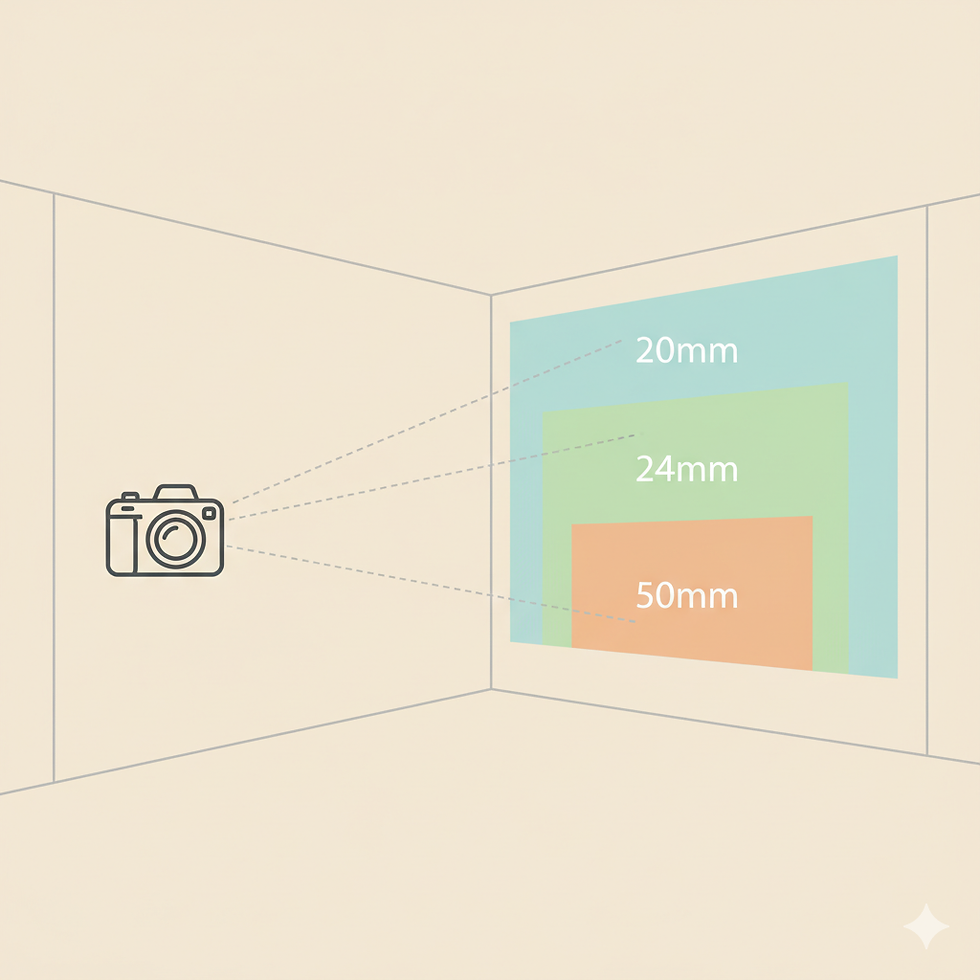
The jump from 24mm to 20mm might sound minimal on paper, but in tight spaces, it gives your frame the room to breathe.
My Need for Wide-Angle Perspective
Solving this perspective puzzle required applying the 3D Framework to transform field experience into tangible technical action.
Dream: The Wide-Angle Challenge in Mysore and Ooty
I started my landscape photography journey using a Nikon Z7 mirrorless camera with the Nikkor Z 24-70 f/4 kit lens. The lens served my early work, offering decent image quality, compactness, and affordability.
My first field trip, covering Mysore and Ooty in 2021, showed the need for a wider lens. When I arrived at the Mysore Palace one afternoon, clouds gathered, hovering behind the central dome.
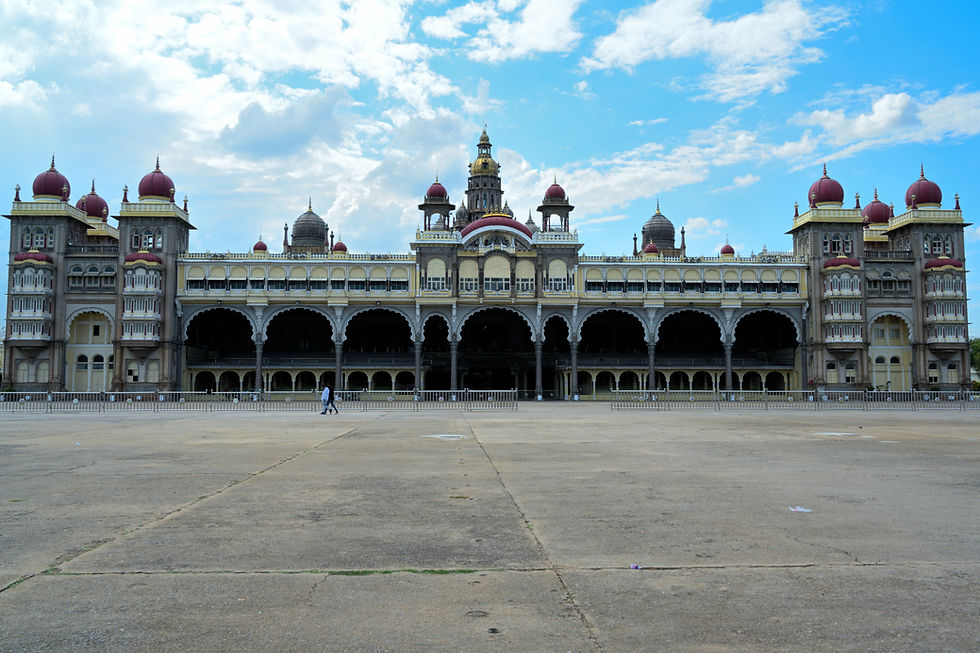
When I included the clouds, the frame trimmed the palace edges. Focusing on the palace meant eliminating the cloud drama.
Later, 20 KM outside Ooty at Ithalar, I photographed a valley filled with a carrot plantation foreground, a turquoise lake mid-ground, and undulating Nilgiris mountains in the background.

My 24-70mm lens felt short, unable to encapsulate the elements my eyes registered. Both instances from the field showed I needed a wide-angle lens in my kit.
Design: Choosing the Storytelling 20mm Lens
I decided to increase my knowledge on wide-angle photography before buying the lens. I discovered two things: I needed a lens wider than my 24-70mm, and I had to reposition my thought process to adapt to wide-angle techniques.
A wider lens, 14mm or less, often called ultra-wide, distorts straight lines. This distortion necessitates careful composition, further complexing the scene dynamics. I focused on a lens that would widen my view without introducing extreme distortion.
I selected the 20mm f/1.8 Nikkor Z lens over the popular 14-24mm f/2.8 zoom because it offered:
Controlled distortion, with automatic lens profile correction minimising the effect.
A prime lens with f/1.8 for sharper image quality and greater light gathering, exceeding the f/2.8 zoom.
A lightweight and compact design that slips into a camera bag, aiding mobility across India’s mountains and beaches.
Greater value for money compared to the 14-24mm.
A prime lens forces zooming with feet, which challenges composition and improves technique.
Discover: Working with the 20mm Focal Length
I travelled to Kerala in November 2023 and used the Nikkor Z 20mm f/1.8 lens on the journey. Swapping the 24-70mm for Nikon's 24-120 f/4 Z kept the wide end of my coverage unchanged.
A vantage point high by the highway edge revealed a landscape mirroring my 2021 Ooty trip. This time, the greener foreground plantation consisted of tea.

The 24mm version of the scene captured the tea plantation (foreground), the waterbody (mid-ground), and the mountains (background), packing them together.
The 20mm lens replaced the 24mm, capturing the same scene. All the elements from the previous scene appeared, but each element gained breathing space.

Review the side-by-side comparison below. The 20mm version elevated the tea plantation foreground and led the eye through the trail to the lake mid-ground and the mountains beyond.
The juxtaposition of the elements added visual elegance. 4mm of extra reach made this possible.

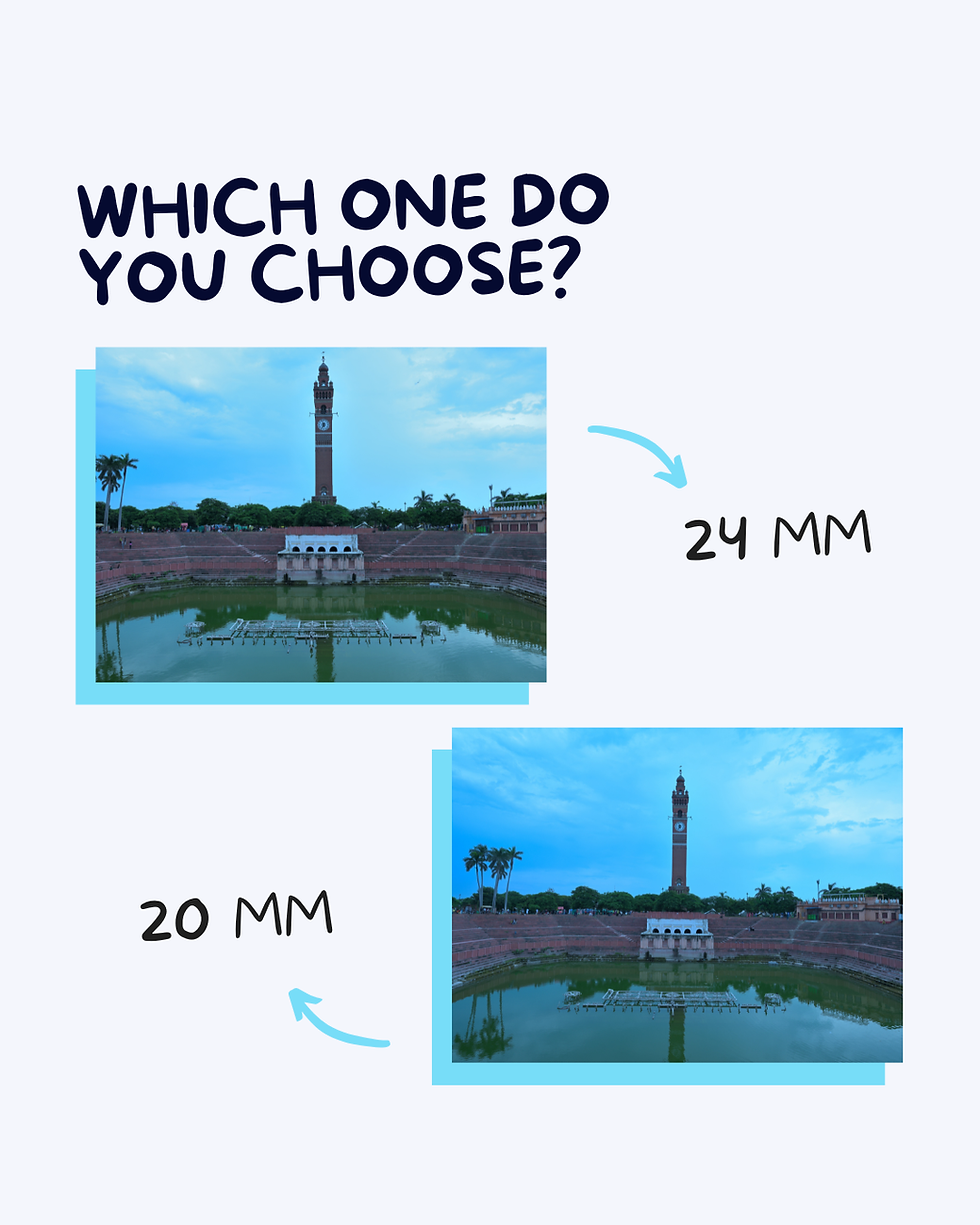
I experienced a similar 4mm difference during a September 2025 trip to Lucknow. Lucknow’s Ghanta Ghar (clocktower) stood tall before a deep green pond surrounded by a huge hexagonal pavilion.
The 24mm captured the scene on the Nikon Z8 camera.
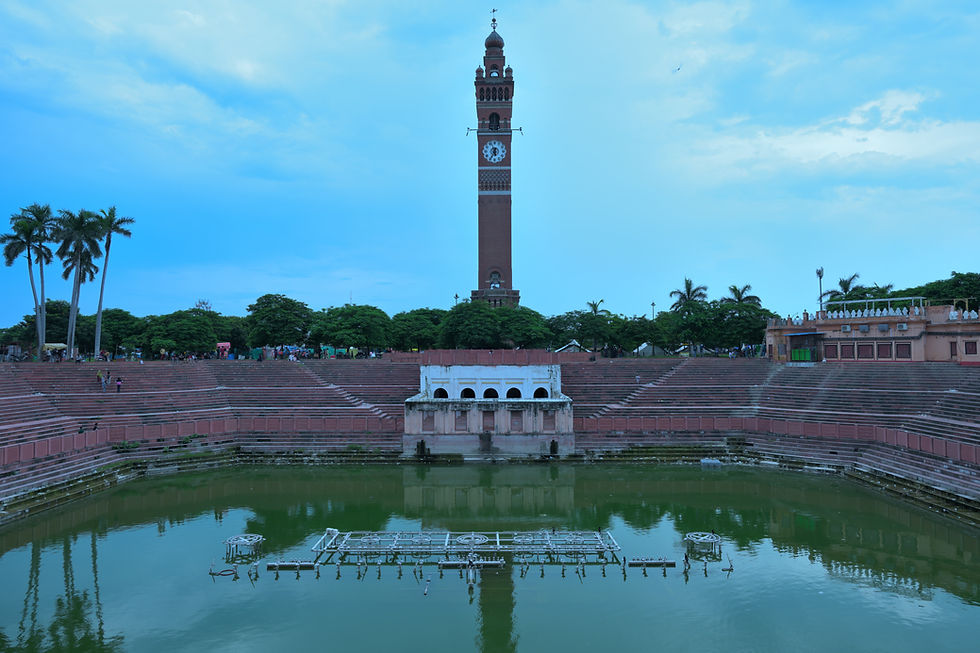
But the scene grew roomier as the 20mm captured it on the Nikon Z7. The extra space on the sides and above the tower made the scene look fuller.
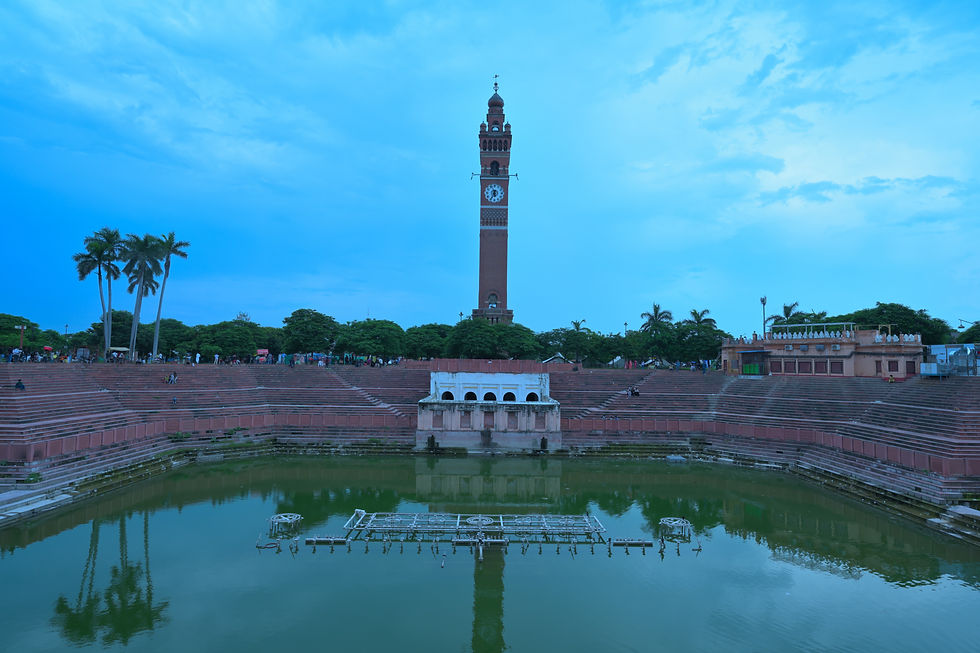
The side-by-side comparison below shows the 20mm on the bottom right, which created more air and scale in the final image.
Practical Field-Tested Tips for Wide-Angle Photography
Whether you shoot with a mirrorless camera or a smartphone, these tips help you return home with better wide-angle frames.
For Landscapes: Framing the View from Foreground to Background
Pay attention to the scene’s elements. When working with a wide lens, the foreground element guides the eye. Natural human eye progression moves from foreground to mid-ground to background.
The framing must compose these elements in harmony, helping the eye traverse the scene. Let me demonstrate this with an example.
I arrived at Cherai Beach near Fort Kochi during a November 2023 Kerala trip. Clouds hid the dusk sun, brightening the sky as waves hit the shore with momentum.
I switched to the 20mm to capture this dramatic transformation. The receding waves drew a frothy, sinusoidal pattern on the beach. Cumulus clouds spread their arms in a parabolic shape as the next waves rushed toward the shore.

As you see in the picture above, the froth became my foreground, the waves formed the mid-ground juxtaposed with the ocean horizon as the background. The floating clouds gave the scene a three-dimensional look.
For Architecture: Meticulous Placement
Instead of relying on automatic software fixes, the real trick with a 20mm for architecture is meticulous placement. Correcting perspective in post-processing removes essential pixels and degrades image quality. Master the frame in-camera to preserve resolution and detail.
When capturing the grand symmetry of a palace or a fort, I focus on two key actions:
Perfect Levelling: Ensure the camera's viewfinder is level and parallel to the subject. This prevents the building from appearing to lean or fall over.
Backing Off (The Wide Secret): While a wide lens tempts you to shoot up close, stepping away captures the grand scale without stretching or exaggerating the foreground elements. The 20mm works best when you step back until the composition feels right.
I applied these points while capturing the wide frame of Cellular Jail's façade during my day tour in Sri Vijaya Puram (Port Blair) in February 2025.

The parallel levelling ensured the building appeared linear, as human eyes saw it. Notice the symmetry, the two central towers, and the equal number of arched windows and doors on either side.
Final Word: Perspective Changes Everything
Whether you shoot on a mirrorless camera or a smartphone, this principle holds true: the way you frame something changes how it feels. Stepping back, changing your angle, or giving your scene more room transforms a snapshot into a story.
In my case, the 20mm proved a handy tool that enhanced this story.
Ready your gear and your eye for your next adventure. What camera or phone settings unlock the best storytelling for your travel? Share your approach and your best wide-angle frames in the comments below.


