Munsiyari Winter Quick Guide: Snow, Road Access & Safety

Updated: Jul 24
In This Quick Guide: Master your winter visit to Munsiyari with expert data on road updates, Johar Valley food traditions, and high altitude snow safety for a secure trip.

On the eastern edge of Uttarakhand, the terrain rises toward the Kumaon Himalaya and settlements grow sparse as elevation increases. Munsiyari sits at this upper threshold, positioned below the Panchachuli massif and facing a landscape shaped by snow, wind exposure, and limited winter access.
Winter alters the operational rhythm of the region. Snowfall restricts movement beyond primary roads, reduces service availability, and concentrates activity within the main settlement and its immediate surroundings.
This Munsiyari Winter Quick Guide focuses on access conditions, winter stability, and location-specific risk awareness for travellers prepared for cold exposure and constrained infrastructure. It explains how base selection, movement timing, and exit planning determine whether winter travel here remains stable and predictable.
Who This Guide Is For
This guide suits travellers prepared for high-altitude winter conditions, limited services, and reduced mobility across Munsiyari and its surrounding terrain. It is intended for those who understand that snow, temperature, and road stability influence daily movement and access.
It supports visitors who prioritise terrain awareness, controlled pacing, and realistic planning over fixed schedules. Winter travel here depends on adapting to weather windows, maintaining exit flexibility, and operating within the constraints imposed by cold exposure and infrastructure reliability.
Why Visit Munsiyari In Winter

Winter reshapes the upper Kumaon Himalaya into a snow-defined landscape where movement slows and terrain features become more pronounced. As temperatures drop and snowfall settles across higher elevations, activity reduces and the settlement operates within narrower operational limits.
Munsiyari faces the Panchachuli massif, and winter conditions bring the mountain range into sustained visual prominence. The reduced atmospheric haze and lower visitor presence allow uninterrupted visibility across the valley and surrounding slopes.
Clear Mountain Visibility: Winter improves visibility of the Panchachuli peaks, especially during early morning and late afternoon light. Snow cover and reduced haze create consistent viewing conditions from the main settlement and nearby ridgelines.
Settlement Stability: The main village remains active through winter, maintaining accommodation, food, and essential services. Reduced visitor traffic allows controlled movement without congestion or access delays.
Terrain Definition: Snow outlines ridgelines, forest edges, and elevation changes that remain less distinct during warmer months. This improves terrain readability and supports deliberate exploration within accessible areas.
Operational Clarity: Winter conditions define clear limits on mobility, access, and daily movement. Travellers who plan around weather windows, daylight duration, and exit stability experience the region without disruption or logistical strain.
Top Experiences & Hidden Gems
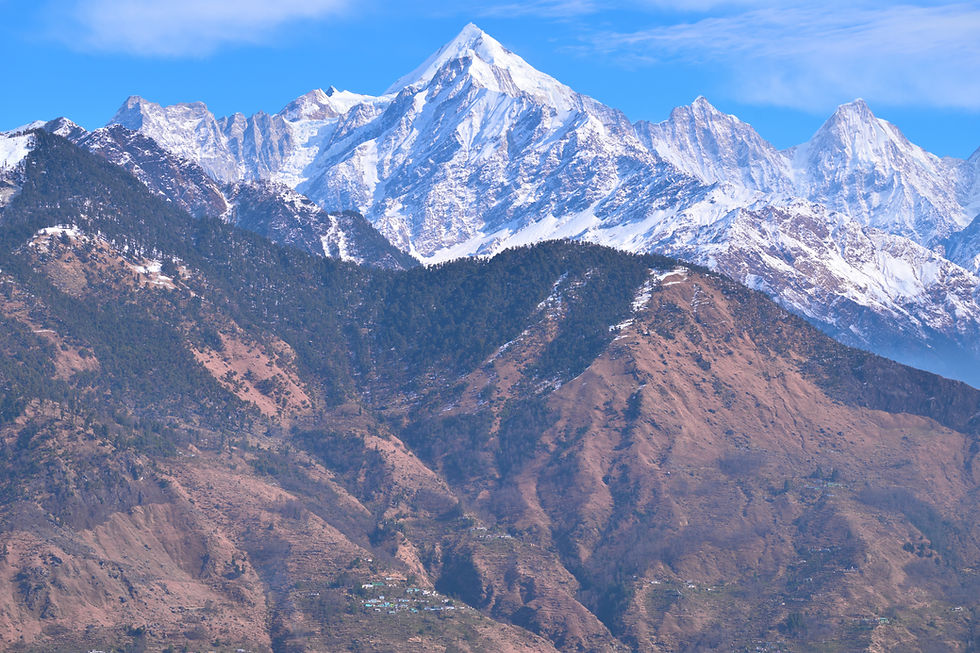
Beyond the main road, the real appeal of winter travel in Munsiyari comes from the landscapes and small locations that reveal the character of the Johar valley.
The approach road itself prepares you for the terrain. Forest sections, exposed ridges and distant peaks appear gradually, helping you understand how isolated the upper valley remains in winter.
The town then becomes the base from which you explore short walks, nearby clearings and quiet village sections that remain accessible depending on snowfall and road conditions.
The map below also places Munsiyari, key viewpoints and nearby locations in their correct geographic context along the upper Goriganga valley.
Panchachuli Base Views: Clear winter mornings in Munsiyari offer direct views of the Panchachuli peaks. Light shifts after sunrise, making early hours the most reliable for photography
Birthi Falls in Winter: Located on the approach road to Munsiyari, Birthi Falls freezes in sections during cold spells. Ice formations develop along the rock face while water continues to flow beneath.
Kalamuni Pass: This high point before Munsiyari offers wide views of surrounding ridges and valleys. Snow conditions vary, but the pass provides a clear perspective of the terrain ahead.
Nanda Devi Temple: Located about 2 KM from Munsiyari town, this temple sits on an elevated slope with clear alignment toward the Panchachuli peaks. Snow, prayer flags and forest sections create strong foreground layers.
Darkot Village: A short distance from Munsiyari, Darkot preserves traditional wooden homes and narrow pathways. Snow reveals structural details and the original village layout.
Goriganga Valley Edge Walks: Short walks along the valley edge reveal forest sections, snowfields and open mountain views. Some paths remain snow covered depending on conditions.
Thamri Kund Area: This forest clearing above Munsiyari offers snow covered ground, quiet surroundings and occasional wildlife presence. Access depends on snowfall and road conditions.
Local Village Sections: Walking through residential areas reveals daily winter life. Smoke from homes, limited movement and snow covered roofs define the seasonal rhythm.
Dil Taal Meadow (near ITBP camp): This open meadow offers unobstructed views of the Panchachuli range. Snow cover creates a wide foreground with clear peak alignment. Access depends on road and weather conditions.
Balanti Potato Farm Area: This open slope provides one of the clearest frontal views of the Panchachuli peaks. Snow covered fields form a strong foreground for landscape photography.
Evening Light from Town Edge: Late afternoon light illuminates the Panchachuli peaks before sunset. Viewing points along the upper edge of town provide clear sight-lines under stable skies.
Best Photography Corners

Winter light in Munsiyari remains sharp, directional and brief. The Panchachuli peaks dominate most frames, but the strongest images come from combining foreground structure, snow texture and human scale.
Work early in the morning and again in late afternoon when the peaks separate cleanly from the sky.
Balanti Potato Farm Foreground: This open slope provides the cleanest frontal alignment with the Panchachuli peaks. Snow-covered ground forms a strong foreground plane, while the peaks rise without obstruction. This location works best for wide compositions.
Dil Taal Meadow Alignment: The open meadow near the ITBP area allows unobstructed framing of the full Panchachuli range. Snow creates a uniform foreground, helping isolate peak contours and ridge detail. This area suits both wide landscapes and layered compositions.
Nanda Devi Temple Axis: The elevated temple position allows alignment of the structure with the Panchachuli peaks behind it. Use the temple, prayer flags and surrounding trees to build depth and scale into the frame.
Town Edge Elevation Points: Upper sections of Munsiyari town provide clear sightlines toward the peaks. Rooftops, smoke trails and snow-covered lanes help introduce human scale against the mountain backdrop.
Darkot Village Architecture: Traditional wooden homes, narrow pathways and stacked structures offer strong compositional elements. Snow highlights rooflines, textures and settlement density.
Kalamuni Pass Ridge Views: This exposed ridge offers wide views across multiple valleys. Use the road curves, tree lines and slope transitions to show terrain structure and elevation.
Birthi Falls Ice Formations: Frozen sections of the waterfall create vertical ice textures. Use surrounding rock and vegetation to frame the frozen surface and flowing water beneath.
Forest Edge and Valley Drop-offs: Sections near Thamri Kund and the valley edge provide layered compositions. Foreground trees, mid-ground slopes and distant peaks help build depth.
Local Vibe, Food & Culture

Winter reduces movement across Munsiyari and the wider Johar valley. The town remains active, but daily rhythm slows and activity follows daylight and weather. The atmosphere reflects continuity rather than tourism.
Johar Valley Food Identity: Food here reflects trans-Himalayan influence rather than typical Kumaoni cuisine. Barley, potatoes and meat form the base of many meals. Broths, stews and slow-cooked preparations dominate because they conserve heat and energy.
Use of Mutton in Winter: Mutton forms an important part of winter diet across the Johar valley. It appears in simple curries, soups and rice combinations. These meals support high-altitude living and differ from the lighter vegetarian emphasis seen in other Kumaon regions.
Temple Presence and Cultural Anchor: The Nanda Devi Temple remains an active spiritual centre for local residents. Prayer flags, ritual visits and seasonal offerings continue through winter. The temple reflects long-standing connection between settlement life and mountain landscape.
Limited but Functional Food Options: Small hotels, homestays and local kitchens remain operational in winter. Meals remain simple and predictable. Dal, rice, roti, egg preparations and meat dishes form the core menu. Variety remains limited compared to peak season.
Trans-Himalayan Cultural Links: The Johar valley historically connected India and Tibet through trade routes. Cultural patterns, clothing and food reflect this legacy. Woollens, heavy coats and layered clothing dominate daily wear.
Settlement Structure and Silence: Residential sections remain quiet during cold spells. Snow clearing, firewood movement and routine household work define daily activity. Street movement remains low outside main daylight hours.
Evening Social Rhythm: Homestays and guesthouses often centre activity around heating sources. Conversations, meals and planning for the next day occur indoors due to cold and early darkness.
Essential Advice & Practical Prep

Winter travel to Munsiyari requires preparation, realistic expectations and flexibility. Snowfall, road exposure and limited infrastructure shape how the town functions.
Access usually remains open, but conditions can shift within hours after fresh snowfall, especially along Kalamuni Pass and exposed road sections.
Who Should Avoid Winter Travel to Munsiyari
Winter travel in the upper Goriganga valley demands physical readiness, cold-weather preparation and comfort with remote terrain. Services remain available in Munsiyari town, but access roads, mobility and daily comfort differ from regular hill destinations.
Families with very young children: Sub-zero temperatures, limited medical infrastructure and cold indoor conditions create avoidable risk for infants and toddlers.
Travellers with respiratory or cardiac conditions: Cold air, altitude around 2,200 metres and reduced oxygen levels can aggravate existing medical conditions. Access to advanced care requires travel to lower towns such as Pithoragarh or Almora.
Visitors expecting resort-style comfort: Heating remains limited, power outages can occur and water systems may freeze overnight. Winter travel here suits those prepared for basic mountain infrastructure.
Travellers without winter clothing or preparation: Proper layering, insulated footwear and cold-weather protection remain essential. Local markets do not stock technical winter gear.
Drivers without mountain driving experience: The road between Birthi Falls, Kalamuni Pass and Munsiyari includes narrow sections, steep gradients and snow accumulation. Safe driving requires experience, patience and correct judgment.
Getting to Munsiyari: By Air, Road and Rail
Munsiyari remains accessible through most of winter and functions as the primary base for the upper Goriganga valley. Hotels, homestays, food and transport continue to operate, though road conditions may shift after snowfall.
Most travellers arrive in Delhi and continue toward Kumaon through Kathgodam, Almora or Pithoragarh. The final mountain section includes exposed ridges, forest corridors and the climb over Kalamuni Pass before descending into Munsiyari.
Nearest Airport: Pantnagar (IATA Code: PGH)
Pantnagar serves as the nearest airport to Munsiyari. Limited direct flights connect Delhi and Pantnagar. From Pantnagar, Munsiyari lies about 310 KM by road. Taxis are available at the airport, and additional shared taxis operate from nearby Haldwani.
Helicopter Service (Pithoragarh–Munsiyari)
A UDAN regional helicopter service connects Pithoragarh and Munsiyari, reducing travel time compared to the four-hour road journey. The service operates twice daily:
Pithoragarh → Munsiyari at 10:30 AM and 1:50 PM
Munsiyari → Pithoragarh at 10:50 AM and 2:10 PM
The fare is fixed at ₹2,500 per person. Operations depend on weather, visibility and seasonal conditions. This remains the fastest access option into Munsiyari when operational.
Nearest Railway Station: Kathgodam (Station Code: KGM)
Kathgodam serves as the main railhead for Kumaon and maintains direct connectivity with Delhi. The Kathgodam Shatabdi and Ranikhet Express provide reliable access.
Haldwani (Station Code: HDW), located 6 KM earlier, offers additional taxi and bus options. From Kathgodam or Haldwani, Munsiyari lies about 275–300 KM by road.
Reaching Munsiyari by Road
The road journey from Kathgodam, Almora or Pithoragarh forms the final access corridor. The route passes through Almora, Berinag, Thal and Kalamuni Pass before reaching Munsiyari.
Road width, surface quality and snow accumulation vary across sections, especially near the pass and shaded forest stretches.
Reaching Munsiyari by Bus and Public Transport
Uttarakhand Transport Corporation (UTC) operates buses from Delhi’s Anand Vihar ISBT to Almora and Pithoragarh, where shared taxis and local buses continue to Munsiyari. Shared taxis from Haldwani and Almora provide the most consistent winter access.
UTC also operates a direct Delhi–Munsiyari bus. The journey takes about 35 to 40 hours and depends on road and weather conditions. Reliability reduces during peak winter due to snowfall, delays and operational variability.

Connectivity, Cash and Season
Mobile Network: Munsiyari maintains functional mobile connectivity across most of the town. Jio and Airtel provide the most stable coverage. Vodafone 4G also remains operational and performed reliably during winter. Signal strength drops outside the main settlement, especially toward Kalamuni Pass, Thamri Kund and remote valley sections. Data speeds vary with terrain, power availability and weather.
Cash, ATMs and UPI: Munsiyari has limited ATM access, and availability depends on network and power stability. Carry sufficient cash from Almora, Pithoragarh or Haldwani as backup. UPI payments worked across most hotels, restaurants and small shops within Munsiyari town during winter. Outside the main settlement, UPI reliability drops due to weaker network coverage. Cash remains necessary for taxis, remote stays and areas beyond town limits.
Season and Road Conditions: Winter road access to Munsiyari remains open through most of the season, but snowfall affects sections near Kalamuni Pass and shaded forest corridors. Temporary closures can occur after fresh snowfall or ice formation. Night temperatures fall below freezing, affecting vehicles, batteries and exposed equipment. Plan road travel during daylight to maintain visibility and safety.
Winter Safety, Accommodation and Practical Readiness

Clothing and Layering: Winter temperatures in Munsiyari fall below freezing, especially at night and early morning. Use thermal base layers, an insulating mid layer and a windproof outer shell. Insulated gloves, wool socks, a warm cap and proper winter footwear remain essential. Snow and ice increase heat loss quickly without adequate protection.
Altitude and Terrain: Munsiyari sits at about 2,200 metres. Most travellers adapt without difficulty, but sudden exertion in cold air causes fatigue. Walk slowly on snow-covered roads, frozen paths and forest trails. Sections near Kalamuni Pass, Thamri Kund and shaded slopes remain icy through the day. Accommodation Reliability: Munsiyari town functions as the primary winter base with operational hotels, homestays, food services and electricity. Heating remains limited in most properties and relies on blankets, room heaters or bukhari systems. Remote stays outside the main town do not operate consistently in winter.
Sarmoli Heritage Village and Homestays: Sarmoli village, located above Munsiyari, hosts traditional homestays run by local families. These properties offer cultural immersion and clear views of the Panchachuli range. Winter conditions remain colder than in the main town, and access roads or walking paths may remain snow covered. Confirm heating availability, water access and approach conditions before booking.
Medical Access and Essentials: Carry a personal medical kit, prescription medicines, cold and flu medication, hydration salts and basic first aid supplies. The government hospital in Munsiyari provides primary care. Advanced medical facilities require travel to Pithoragarh or Almora. Carry a power bank, flashlight and spare batteries, as cold reduces battery performance.
Weather and Movement Awareness: Snowfall, fog and cloud cover reduce visibility and affect road safety. Check local weather and road conditions before leaving town for Kalamuni Pass, Birthi Falls or remote viewpoints. Avoid late evening travel on unfamiliar mountain roads during winter.
Vehicle and Road Preparedness: Road access to Munsiyari remains stable through most of winter, but snowfall affects steep sections and shaded turns. Hire experienced local drivers familiar with winter terrain. If driving independently, avoid night driving and maintain conservative speeds.
BRO Road Updates: The approach road to Munsiyari, including sections near Birthi Falls and Kalamuni Pass, falls under the Border Roads Organisation (BRO). Snowfall, ice accumulation and landslides can affect these stretches during winter. BRO clearance operations usually restore access, but delays remain possible after fresh snowfall. Track updates through BRO’s official channels, including the X account @BROindia, and confirm road status locally before departure from Almora, Berinag or Thal.
Local Coordination: Inform your hotel or host before travelling to remote viewpoints, forest areas or meadow sections. Mobile signal drops outside town limits, and advance awareness improves response in case of delays.
Emergency Preparedness: Winter Protocols for Munsiyari and Upper Goriganga Valley
Winter conditions in Munsiyari change travel reliability, especially along the Thal–Birthi–Kalamuni Pass corridor and remote sections above town. Snowfall, fog and terrain exposure can affect movement, communication and access timelines.

Preparation improves safety and allows informed decisions before entering or moving beyond the main settlement.
Trip Coordination with Accommodation: Share your travel plan with your hotel, homestay or host upon arrival. Provide intended routes, planned viewpoints and expected return times, especially when visiting Dil Taal Meadow, Thamri Kund or Kalamuni Pass. Local hosts remain the most reliable coordination point in case of delays.
Route Timing Discipline: Complete road travel and remote viewpoint visits during daylight hours. Avoid movement after sunset in winter, as temperatures drop rapidly and visibility reduces. Early return improves safety margins if weather or road conditions change.
Avoid Solo Movement in Remote Sections: Travel with known drivers, local guides or other visitors when moving toward forest clearings, meadows or valley-edge areas. Mobile connectivity drops outside town, and isolation increases response time during emergencies.
Weather and Road Status Confirmation: Confirm road and weather conditions locally before departure toward Kalamuni Pass, Birthi Falls or Pithoragarh. BRO clearance timelines and snowfall patterns influence access stability.
Vehicle Readiness and Fuel Discipline: Maintain sufficient fuel before leaving Almora, Berinag or Pithoragarh, as fuel stations do not exist in Munsiyari. Vehicles should remain in good mechanical condition, and drivers must understand mountain terrain and winter braking limitations.
Power, Light and Backup Essentials: Carry a charged power bank, flashlight and spare batteries. Cold temperatures reduce battery performance, and power outages may occur during winter.
Emergency Exit Awareness: In case of heavy snowfall, remain within Munsiyari town and avoid attempting descent until road clearance completes. Hotels, homestays and local authorities provide guidance based on current terrain and access conditions.
Emergency Contacts and Access Points for Medical Support
Munsiyari has basic medical infrastructure suitable for primary treatment and stabilisation. Advanced care requires transfer to larger hospitals in Pithoragarh or Almora. Travellers should keep emergency contacts saved offline and written down, as mobile connectivity may weaken outside town.
Official Emergency Numbers:
112 for unified emergency assistance
108 and 102 for ambulance and medical support
1077 for the Uttarakhand Disaster Control Room
Nearest Medical Facility: Community Health Centre (CHC) | Phone: 05961-222221, Munsiyari provides primary care, first response and basic treatment. This remains the first point of contact for illness or injury within the town.
Nearest Major Hospitals: District Hospital Pithoragarh | Phone: 05964-225687, serves as the nearest full-service hospital with diagnostic and emergency care. Larger referral hospitals exist in Almora and Haldwani for specialised treatment.
Evacuation Flow: Initial assistance usually comes from hotel staff, homestay hosts, drivers or local residents. Patients are stabilised at Munsiyari CHC and transferred to Pithoragarh by road when required. Helicopter evacuation may be possible through the Pithoragarh–Munsiyari service, subject to availability, weather and operational clearance.
If Stranded or Injured in Remote Areas: Remain within inhabited locations such as villages, homestays or roadside establishments. Avoid attempting descent or walking into isolated forest or valley sections without support. Local residents, BRO teams and district authorities coordinate assistance based on terrain and access conditions.
Communication Readiness and Connectivity Backup
Mobile connectivity in Munsiyari remains stable within the main town but weakens outside the settlement. Network drops occur near Kalamuni Pass, Thamri Kund, Dil Taal Meadow and forest sections along the upper valley.

Winter weather, power outages and terrain exposure can further affect signal reliability.
Offline Maps: Download Google Offline Maps and Mapy.cz before arriving in Munsiyari. These remain functional without network access and help with navigation toward Birthi Falls, Kalamuni Pass and remote meadow areas.
Local Driver Advantage: Travel with local drivers or coordinate through homestays that understand terrain conditions and communication gaps. Local drivers remain connected through informal networks and receive early information about road closures or weather shifts.
Power and Device Backup: Carry a fully charged power bank and keep phones insulated from cold exposure. Low temperatures reduce battery life significantly, especially during early morning and late evening.
When Network Fails:
Move toward inhabited areas such as Munsiyari town centre, hotels, homestays or village clusters like Sarmoli.
Use hotel landlines or request assistance from local residents to make outbound calls.
Avoid continuing into forest trails, meadow sections or valley-edge routes without confirmed connectivity.
Communication Discipline Before Departure: Inform your hotel or host before visiting remote viewpoints or travelling toward Kalamuni Pass or Birthi Falls. Share expected return timing so delays can be identified early.
Golden Rule of the Himalayas
Travel in winter becomes safer when people remain connected.
No network means no isolation.
Stay close to settlements, vehicles and groups. Human networks sustain safety when phone networks fail.


